



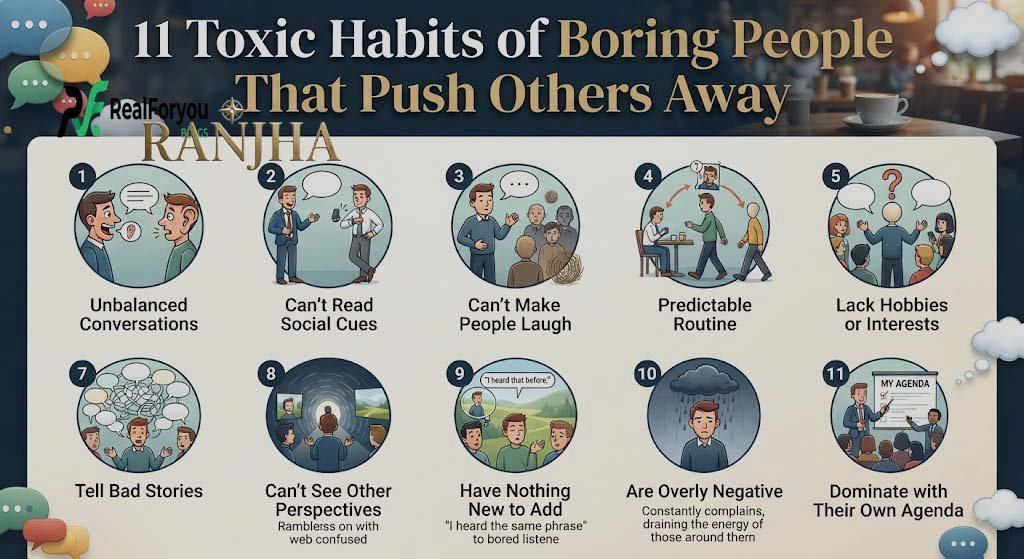
11 Habits of Boring People
We all have that one person in our lives who makes us suppress a yawn the moment they start talking. The conversation feels like a chore, and you find yourself mentally checking out. But what exactly turns someone into a bore? Psychology and crowd-sourced wisdom have identified some common habits that make a person seem uninteresting .
1. They Have Unbalanced Conversations

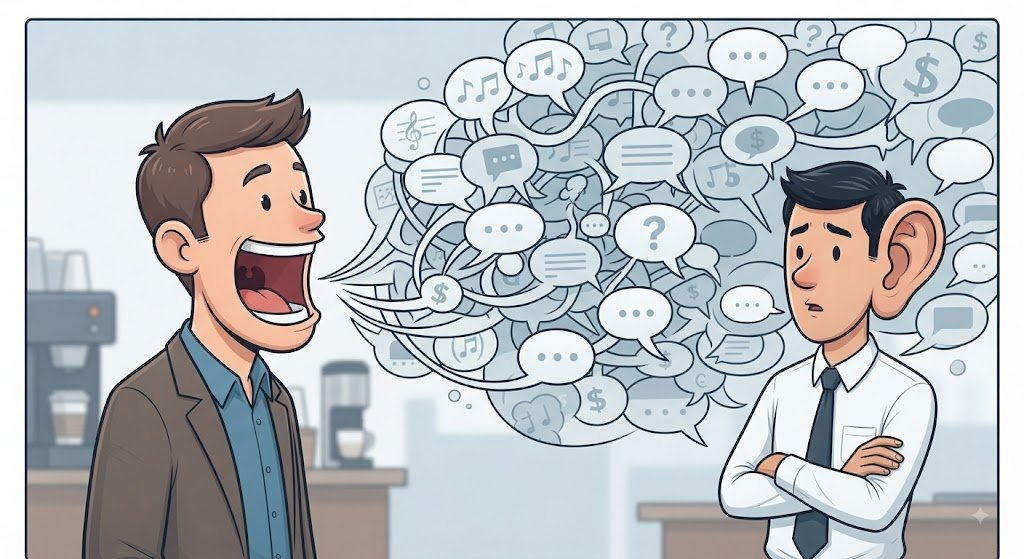
Instead of finding a rhythm between talking and listening, boring people are often on one conversational extreme. Some dominate the discussion, talking endlessly about themselves without pausing for input. Others clam up entirely, contributing little to nothing and leaving others to carry the load. This asymmetry in the “give and take” makes interactions feel like a monologue or an interrogation, rather than a dialogue .
2. They Can’t Read Social Cues
Boring people often miss the body language and signals that say, “I’m not interested in what you’re saying.” They continue talking even when the other person is nodding politely but clearly looking for an escape. This inability to gauge engagement makes conversations tedious for everyone else .
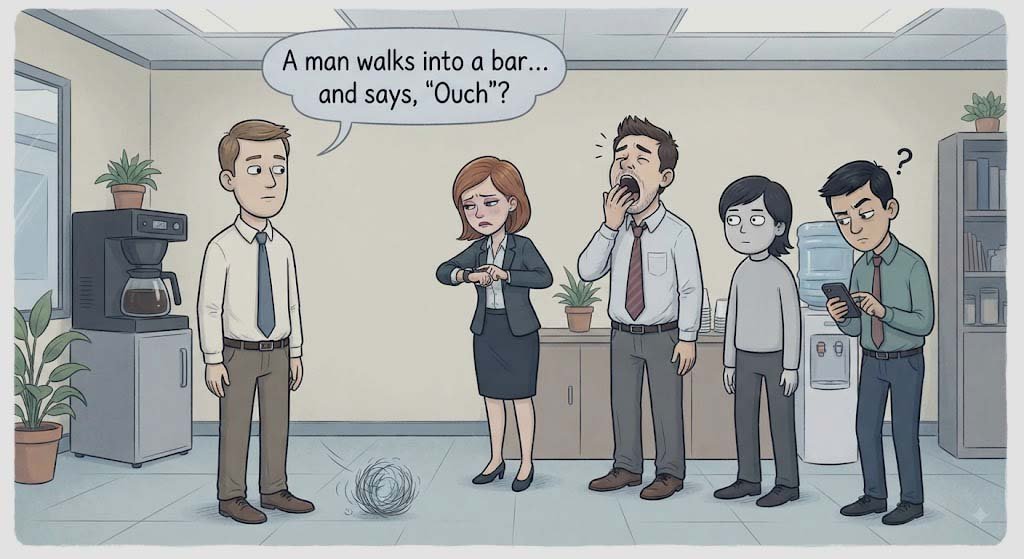
3. They Can’t Make People Laugh
Humor is a sign of “cognitive flexibility”—the ability to see things from different perspectives and make light of them. Boring people lack this skill. If you can’t make others laugh or appreciate a good joke, conversations can quickly become dull and predictable .
4. They Stick to a Predictable Routine
People who always do the same thing—eating at the same restaurant, listening to the same music, or going to the same pub every weekend—often have little to talk about. Diverse experiences make for richer conversations. A life confined to routine and inactivity leaves you without the rich experiences and insights that make conversation meaningful.
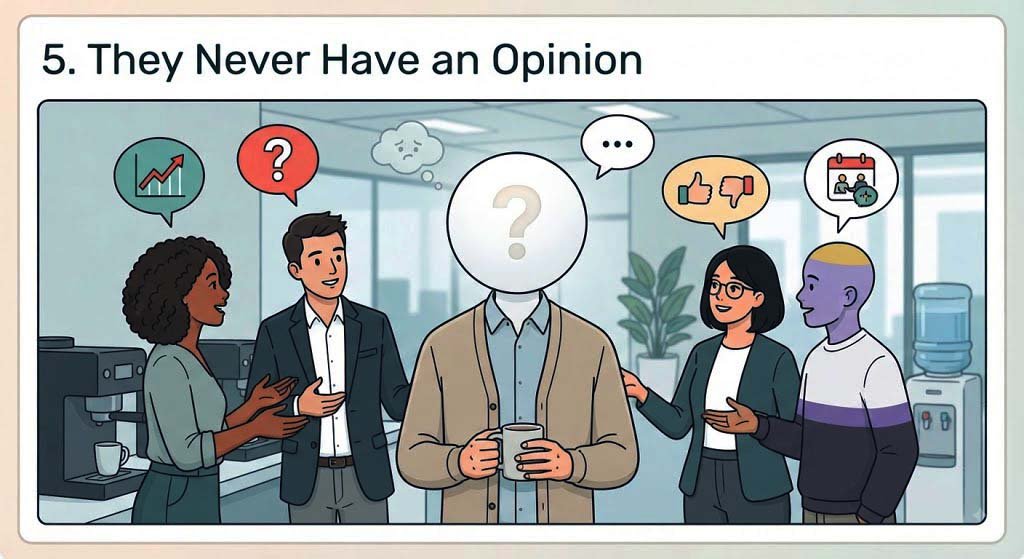
5. They Never Have an Opinion
Some people avoid expressing strong views, either out of fear of conflict or because they haven’t thought critically about the world. A person who only offers vague responses like “I dunno, sort of” adds little of value to a discussion. Interesting people have opinions and can explain why they hold them, even if they’re unconventional .
6. They Lack Hobbies or Interests
Research has identified the five most boring hobbies as sleeping, religion, watching TV, observing animals, and mathematics . While this is a stereotype, the underlying point stands: a person with no genuine interests or passions appears unengaged with the world and offers little to talk about .
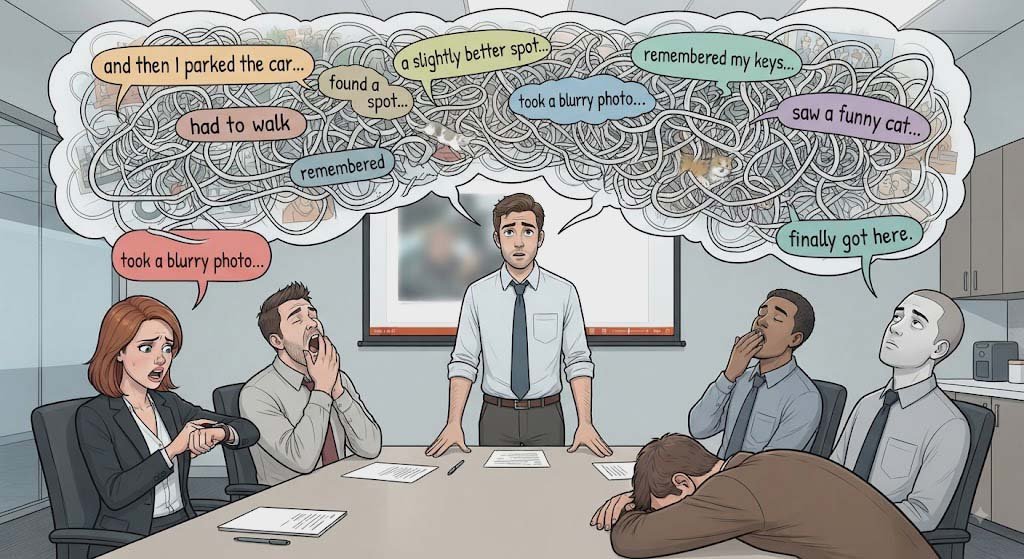
7. They Tell Bad Stories
A good storyteller knows how to captivate an audience with pacing and detail. Boring people either ramble on with too much irrelevant detail or rush through the story without enthusiasm. As one observer put it, they are often the human equivalent of “this meeting could have been an email” .
8. They Can’t See Other Perspectives
Being able to step into someone else’s shoes is a hallmark of emotional intelligence—and of interesting people. Those who are rigidly fixed on their own perspective, believing they are right without leaving room for other takes, can be tedious to talk to .
9. They Have Nothing New to Add
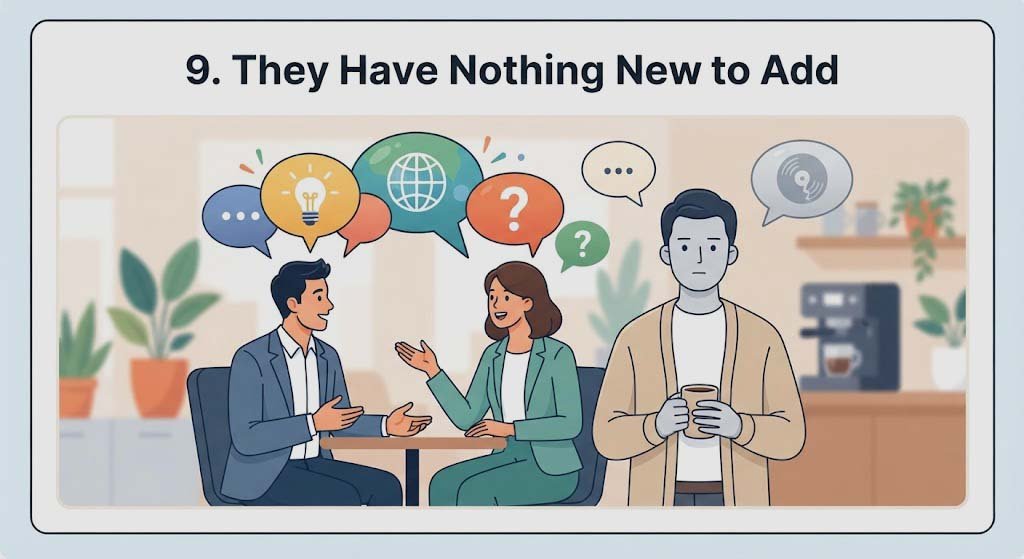
Our brains are naturally wired to crave novelty and fresh stimuli. If you have nothing new to offer in a conversation—whether it’s a fresh idea, a new experience, or a different perspective—listeners will quickly lose interest. Interesting people are constant learners who bring fresh insights to the table .
10. They Are Overly Negative
Constant complaining is a conversational drag. People who always blame others, adopt a victim mentality, or dwell on problems without solutions drain the energy from any interaction. While everyone has bad days, perpetual negativity makes people want to avoid you .

11. They Dominate with Their Own Agenda
Boring people often talk about one thing when they should really be talking about another. They might lecture at length about sophisticated subjects while actually using those topics to avoid discussing something painful in their own lives. This evasion makes them feel disconnected and hollow to those listening .
About the Author
My name is Dua Qamar, and I am a content writer fascinated by social psychology and human behaviour. I believe that the more we understand our habits, the more we can grow. Boredom is not a permanent personality trait—it is often just a pattern of behaviour that can be changed with self-awareness and curiosity.
Why I Wrote This Article:
I wrote this piece because I have encountered many people who are genuinely wonderful but have developed habits that push others away. I wanted to offer a reflection that is not about judging others, but about understanding ourselves. No one sets out to be boring—it is often just a sign that we have stopped growing.
How I Approached This Topic:
I researched this topic by drawing on studies and articles that have crowdsourced definitions of “boring” from thousands of people. I cross-referenced different sources to identify the most common themes and presented them in a way that is relatable and constructive .
Who This Article Is For:
This article is for you if you’ve ever felt exhausted after particular conversations, or if you’re simply curious about evaluating your own way of communicating. It is for the curious, the self-aware, and those who want to be more engaging in their personal and professional lives.
The Message I Hope Readers Take Away:
The habits of boring people are not fixed traits—they are behaviours that can be changed. The most interesting people are those who stay curious, listen actively, embrace new experiences, and are brave enough to share what they truly think and feel.
Written by: Dua Qamar


