



Global Mobile Data Prices (2015–2016): A Worldwide Comparison
Introduction
By 2015 and 2016, the mobile internet had become an indispensable part of daily life across the globe.Smartphones transformed everyday life by making it easier to book transportation, communicate instantly, watch videos, and access information anytime. They changed the way people worked, stayed connected, and interacted with the digital world. However, access to this digital world came at very different costs depending on where you lived.
According to the International Telecommunication Union (ITU), the number of people accessing the internet via mobile broadband continued to rise, with approximately 17% growth from 2015 to 2016 . This surge was driven by the proliferation of affordable smartphones and the rise of cost-effective apps that provided alternatives to traditional voice and SMS services . Yet, while the technology spread, the affordability of data remained a significant barrier in many parts of the world.
How Data Prices Were Measured

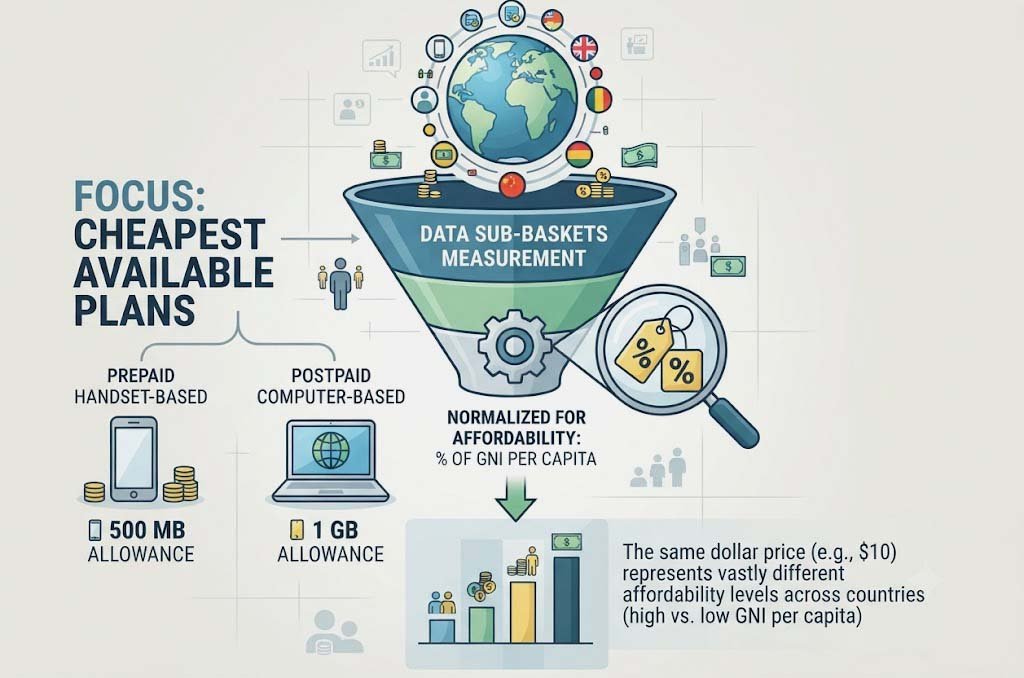
To understand the global data landscape, the ITU tracked the “mobile-broadband” sub-baskets, focusing on the cheapest commercially available plans offered by dominant mobile operators . They primarily examined two types: prepaid handset-based plans with a 500 MB allowance, and postpaid computer-based plans with a 1 GB allowance .
These prices are often expressed as a percentage of a country’s Gross National Income (GNI) per capita. This metric provides a far more accurate picture of affordability than the raw US dollar price alone. A $10 data plan might be a minor expense for someone in a high-income country, but a crippling cost for someone in a lower-income nation.
The Cheapest and Most Expensive Countries

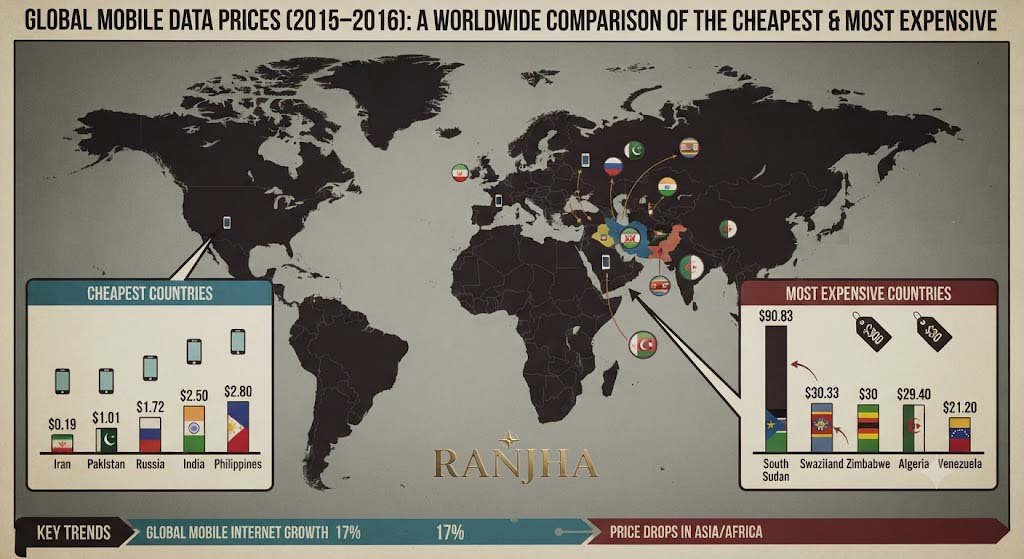
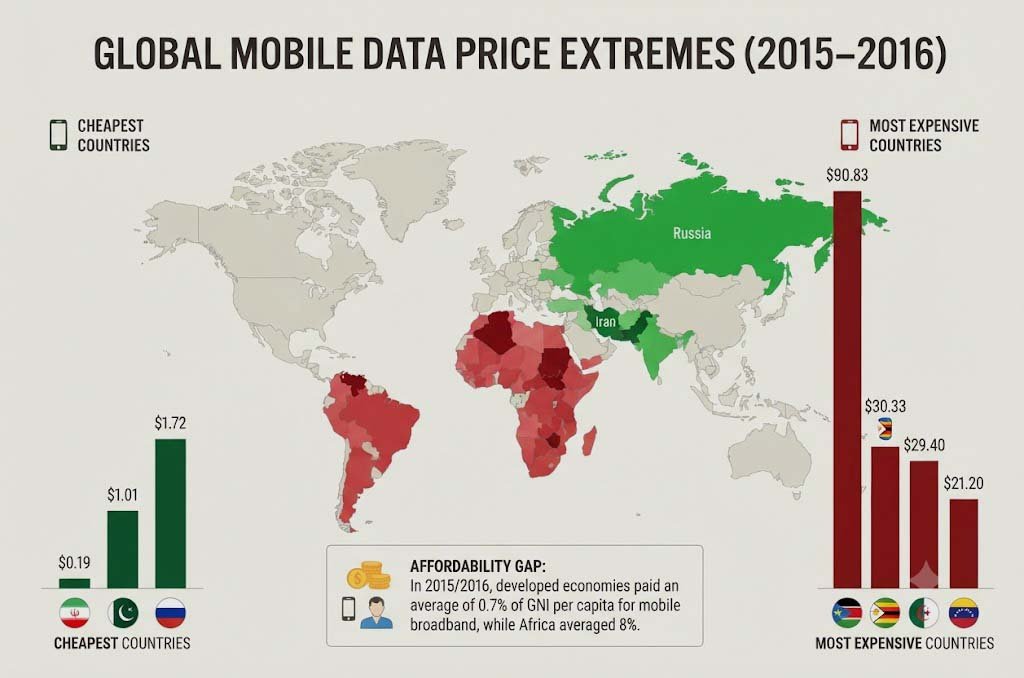
The global data price spectrum in 2015/2016 showcased dramatic inequalities. According to a 2015 analysis by Content Review, the most expensive places for mobile internet were the United Kingdom ($16.10 per GB), Venezuela ($21.20), and Algeria ($29.40) . In stark contrast, the cheapest were Iran ($0.19 per GB) and Pakistan ($1.01) . Russia also ranked among the cheapest, at $1.72 per GB .
A report by Research ICT Africa also highlighted regional extremes. In Africa, the cheapest 1GB bundles were found in Tanzania (US$0.89), Egypt (US$2.82), and Mozambique (US$2.87) . At the other end of the spectrum, South Sudan (US$90.83) and Swaziland (US$30.33) had the most expensive, placing Zimbabwe (US$30) as the third-highest on the continent .
Regional Trends
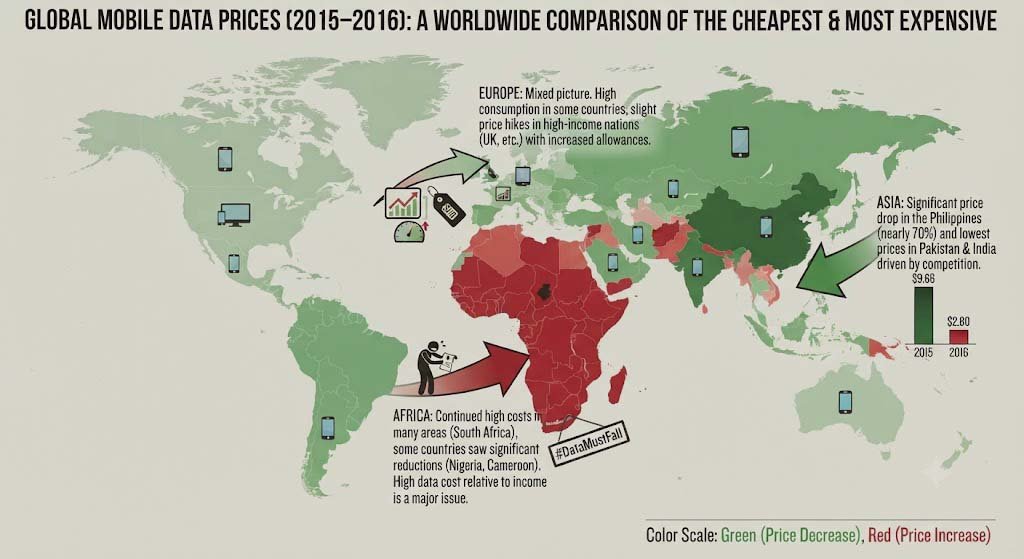
In Asia, the Philippines saw a significant drop in mobile data prices of nearly 70% from 2015 to 2016 as operators pushed mobile broadband services more aggressively . By 2016, Filipino mobile-broadband prices for 1GB data represented only 2.1% of GNI per capita . At the same time, Pakistan and India were experiencing some of the lowest data prices globally, driven by intense competition among providers .
In Europe, the picture was mixed. The OECD reported that average mobile data usage per subscription was already climbing, with some European countries showing high data consumption, reflecting more affordable plans . However, high-income nations in Europe and North America saw slight price hikes in US dollar terms in 2016, although these were sometimes accompanied by much higher monthly data allowances, meaning the consumer was getting better value for money .
In Africa, while some countries like Nigeria and Cameroon saw a price reduction of more than 50% from 2015 to 2016 due to more competitive plans , others continued to struggle with high costs. South African mobile operators, for instance, were noted for their high profitability, which critics linked to high data prices . The #DataMustFall campaign gained strong public support in South Africa as people protested against the high cost of mobile data across the country. Campaigners pointed out that many low-income families had to spend as much as 20% of their earnings to buy just 1 GB of mobile data, making internet access far making internet access unaffordable for millions of people across the country.
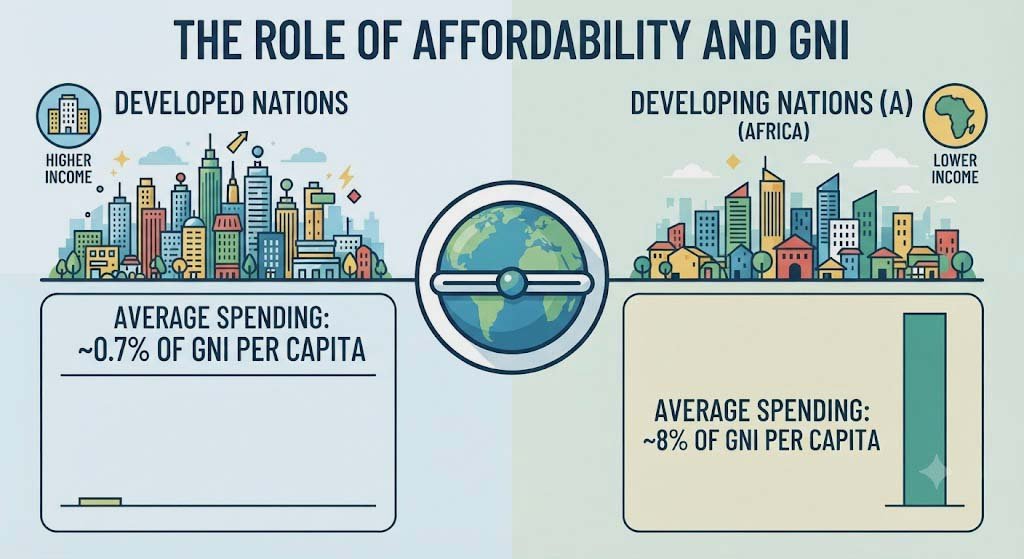
The Role of Affordability and GNI
In 2015/2016, the difference in affordability between developed and developing nations was stark. The ITU reported that developed economies had mobile-broadband prices averaging about 0.7% of GNI per capita . In contrast, prices in Africa averaged 8% of GNI per capita—meaning data costs consumed a much larger fraction of a typical person’s income . This disparity represented a major barrier to digital inclusion in the developing world.
Conclusion
The mobile data landscape of 2015/2016 was one of stark contrasts. While consumers in Pakistan and Russia could browse for under $2 per GB , those in parts of Africa and Europe faced prices that were many times higher . The year 2016 marked an inflection point where data prices in some regions began to fall dramatically, but the cost of connectivity in relation to income remained a significant global challenge. Access to the digital world was, and arguably still is, an issue of economic inequality as much as it is of technological infrastructure.
About the Author
My name is Dua Qamar, and I am a content writer passionate about exploring how technology, economics, and policy intersect to shape our lives.
Why I Wrote This Article:
I wrote this piece because the cost of data is one of the most tangible ways we experience global inequality. Understanding how prices varied in 2015/2016, at a time of rapid mobile internet adoption, helps us appreciate the progress made and the barriers that remain.
How I Approached This Topic:
My research relied on data and reports from trusted international bodies, including the ITU and Research ICT Africa, as well as analyses from reputable news outlets and industry sources.
Who This Article Is For:
This article is for readers interested in technology, digital rights, and the global economy. If you have ever wondered why data costs vary so much around the world, this piece offers a snapshot of the landscape just a few years ago.
The Message I Hope Readers Take Away:
Affordable mobile data is a key driver of opportunity. The prices of 2015/2016 highlight that while technology is global, equitable access requires addressing the economic inequalities thatdictate who gets to connect.
Written by:Dua Qamar


