



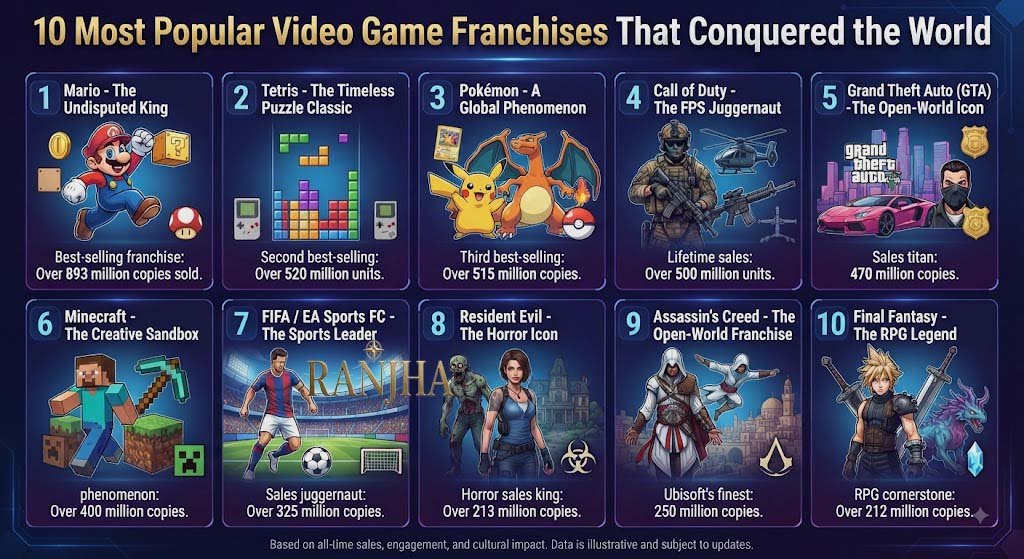
10 Most Popular Video Game Franchises
The video game industry has brought to life an endless array of unforgettable characters and immersive worlds. However, only a select few franchises have achieved true global dominance. Based on a combination of all-time sales, player engagement, and cultural impact, here are ten of the most popular and successful video game franchises.
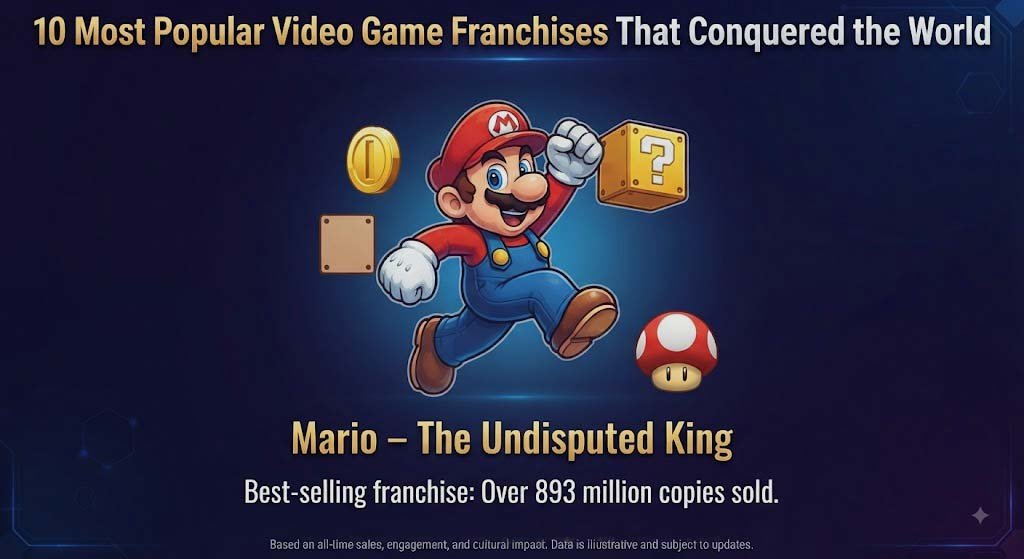
1. Mario – The Undisputed King

Mario isn’t just a video game franchise—it’s a cultural institution. With over 893 million copies sold across its extensive library, it stands as the best-selling video game franchise of all time . Its commercial success is equally staggering, generating a lifetime gross revenue of $53.85 billion .
Part of Mario’s genius lies in its incredible versatility . It doesn’t belong to just one genre—it represents a vast and diverse ecosystem that encompasses:
Platformers: The mainline Super Mario games that define the genre.
Kart Racing: The wildly successful Mario Kart series.
Party Games: Social multiplayer experiences like Mario Party.
Role-Playing Games (RPGs) – including beloved titles such as Paper Mario and the Mario & Luigi series.
This cross-genre appeal, combined with Nintendo’s ability to reinvent Mario for each console generation, has kept the franchise at the top for over three decades. The franchise’s cultural power extends beyond gaming; the 2023 animated movie was a massive hit, grossing over $1.3 billion globally .
2. Tetris – The Timeless Puzzle Classic
Often considered the definitive puzzle game, Tetris has sold over 520 million units worldwide . Its brilliance lies in its pure, unadulterated simplicity, making it accessible on virtually any device with a screen. It remains the second best-selling franchise in gaming history.
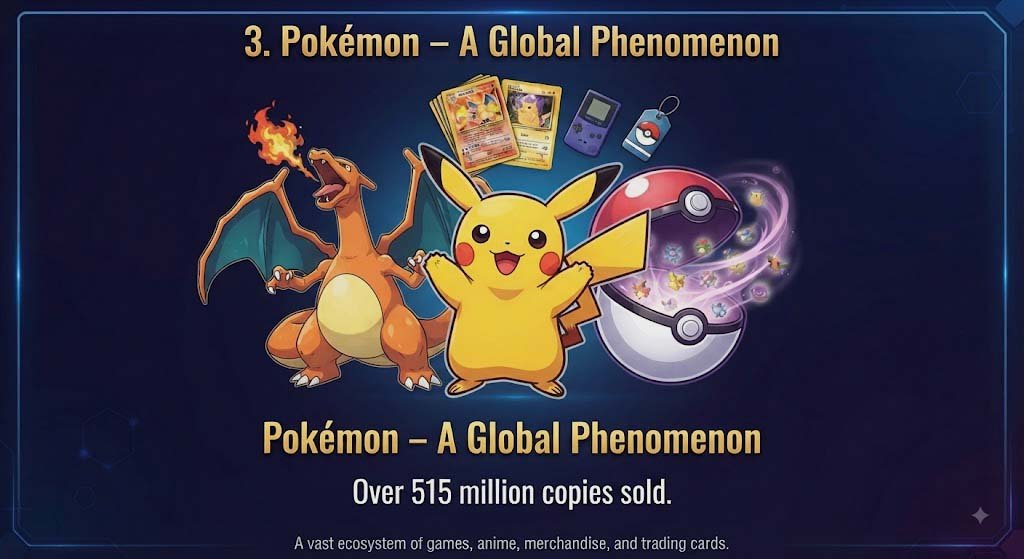
3. Pokémon – A Global Phenomenon
With over 515 million copies sold, Pokémon continues to be a powerhouse across generations . Unlike many franchises, Pokémon’s strength comes from a “collect them all” addiction, with the main games supported by a vast ecosystem of merchandise, an anime series, and a hugely popular trading card game. It holds the third spot on the sales charts .
4. Call of Duty – The FPS Juggernaut
Call of Duty remains the king of first-person shooters, with lifetime sales exceeding 500 million units . Its annual release cycle, fueled by a competitive multiplayer mode, a cinematic campaign, and a massive battle royale offering in Warzone, makes it an ever-present force in gaming. It consistently ranks as one of the most-played games on both PlayStation and Xbox .
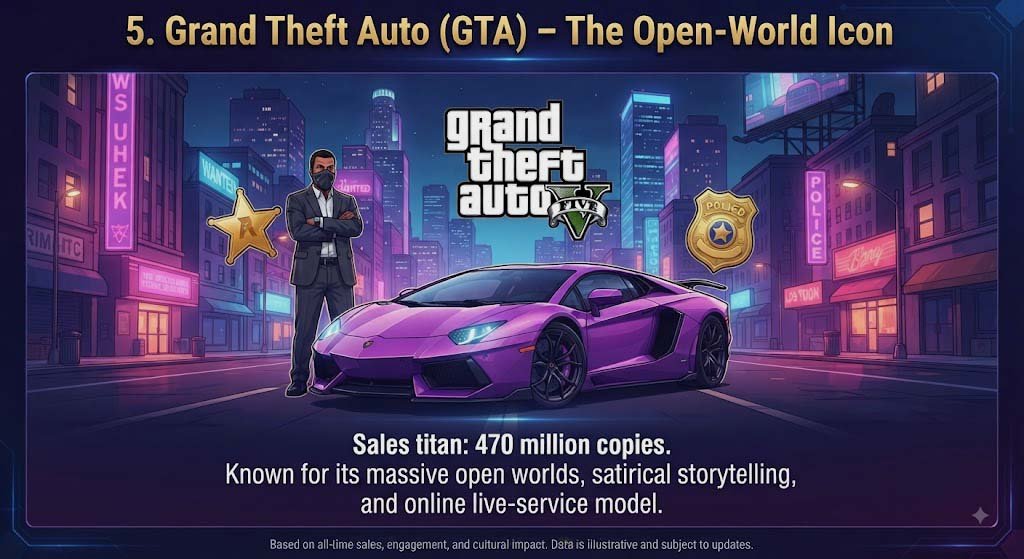
5. Grand Theft Auto (GTA) – The Open-World Icon
With 470 million copies sold, Grand Theft Auto is an industry titan . The franchise, led by the massive success of GTA V and GTA Online, is known for its sprawling open worlds, satirical storytelling, and a live-service model that has kept players engaged for years. The upcoming release of GTA VI is expected to push its sales significantly higher.
6. Minecraft – The Creative Sandbox
Minecraft is a phenomenon of limitless creativity and is technically a single game rather than a traditional series. However, it has sold over 400 million copies and has evolved into a full-fledged franchise through countless updates, ports, and spin-offs . Its blocky aesthetic and “build anything” philosophy have made it a staple for players of all ages, ranking among the most-played games in the US .
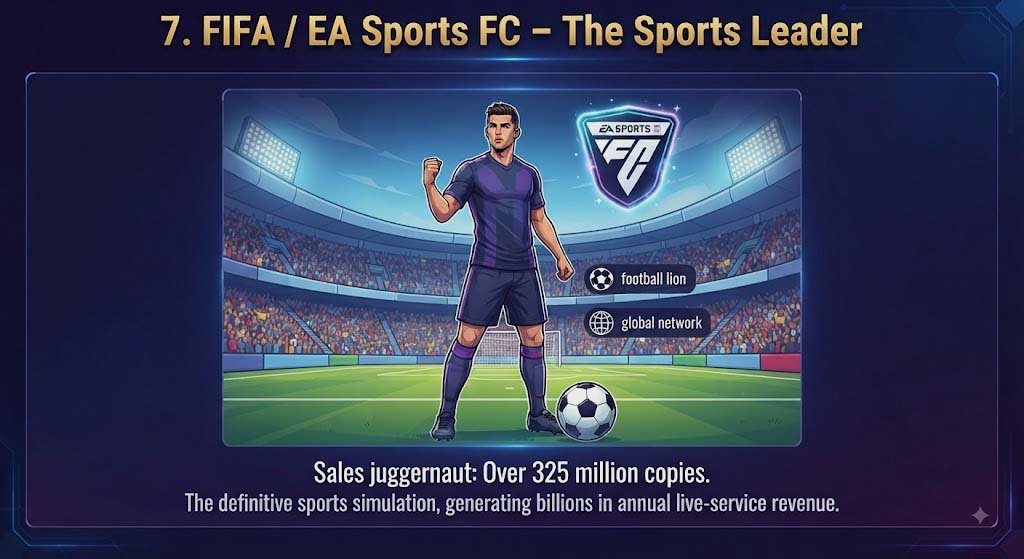
7. FIFA / EA Sports FC – The Sports Leader
The EA Sports football franchise (formerly FIFA, now EA Sports FC) has sold over 325 million copies . Its annual release cycle and immersive Ultimate Team mode have made it the definitive sports simulation for football fans worldwide, generating billions in revenue through the franchise’s life cycle.
8. Resident Evil – The Horror Icon
With 213 million copies sold globally, Resident Evil ranks among Japan’s most successful entertainment franchises. Its recent resurgence, driven by critically acclaimed remakes, has allowed it to surpass Final Fantasy in total sales, cementing its place among the elite.
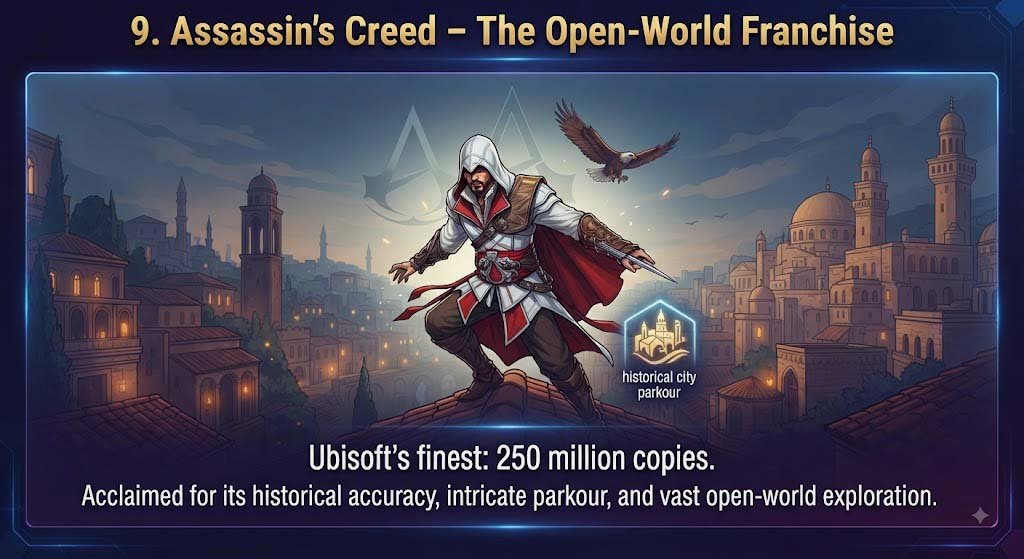
9. Assassin’s Creed – The Open-World Franchise
Ubisoft’s flagship series, Assassin’s Creed, has sold 250 million copies . Known for its historical settings and intricate parkour mechanics, it remains the only Ubisoft franchise in the top ten, proving its enduring mainstream popularity.
10. Final Fantasy – The RPG Legend
Rounding out the list is Final Fantasy, with 212 million copies sold . The series is famous for its epic storylines, cinematic visuals, and iconic characters. It is a cornerstone of the RPG genre, with a legacy spanning over three decades .
About the Author
My name is Dua Qamar, and I am a content writer passionate about gaming, pop culture, and the stories behind the world’s most successful entertainment franchises. I believe that understanding what makes a game popular provides a fascinating glimpse into how people play, connect, and find meaning in interactive experiences.
Why I Wrote This Article:
I wrote this piece because the video game industry is a multi-billion-dollar entertainment juggernaut, yet the franchises that lead it remain somewhat of a mystery to the casual observer. I wanted to provide a clear, data-driven snapshot of the ten most popular and successful franchises that have captivated audiences for decades. This list helps explain not just what people play, but why certain franchises achieve cultural immortality.
How I Approached This Topic:
I researched this topic by drawing on multiple industry sources, including sales data from leading analysts and reputable gaming publications. I focused on presenting a combined view of sales figures and cultural significance. The franchises listed are those that consistently appear at the top of sales and engagement charts, proving their status as the most popular and beloved in the world .
Who This Article Is For:
This article is for gamers, industry observers, and anyone curious about the commercial and cultural power of interactive entertainment. It offers a clear and concise guide to the titans of the video game world.
The Message I Hope Readers Take Away:
The most popular video game franchises achieve success through a combination of factors—innovative gameplay, strong community engagement, effective franchising, and a deep connection with players. They are not just games; they are enduring cultural legacies that will continue to shape the interactive landscape for years to come.
Written by: Dua Qamar


