



America’s Richest Food Dynasties: The Families Behind the Biggest Food Businesses in the USA
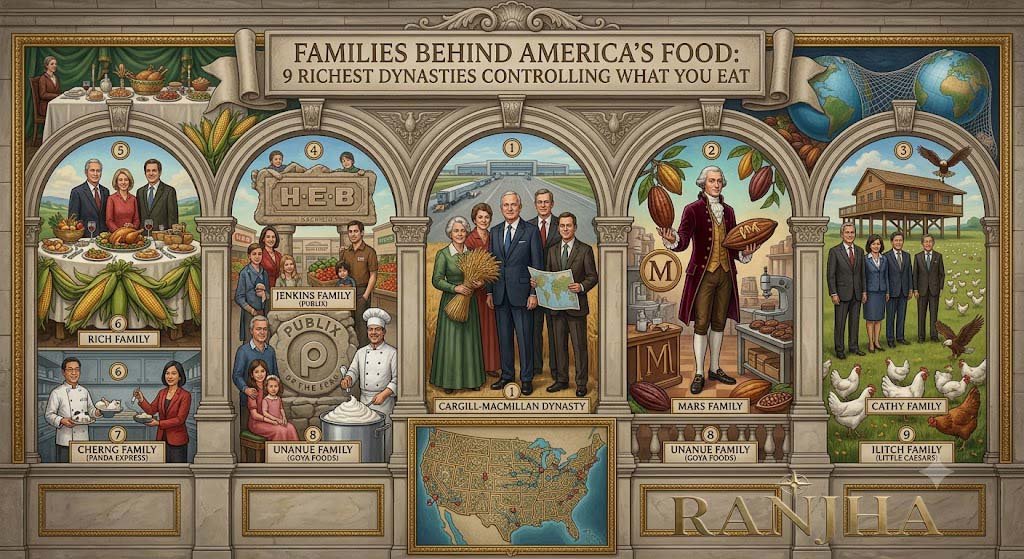
When you walk through a supermarket or place an order at a fast-food restaurant, there’s a good chance you’re buying from a business owned or controlled by a single family empire. Across the United States, some of the biggest and most influential food businesses remain firmly in the hands of the dynasties that founded them—from global agricultural giants to beloved supermarket chains and cultural icons.
Here’s a look at the richest and most powerful families owning America’s largest food empires.

The Cargill-MacMillan Dynasty: America’s Most Powerful Food Family
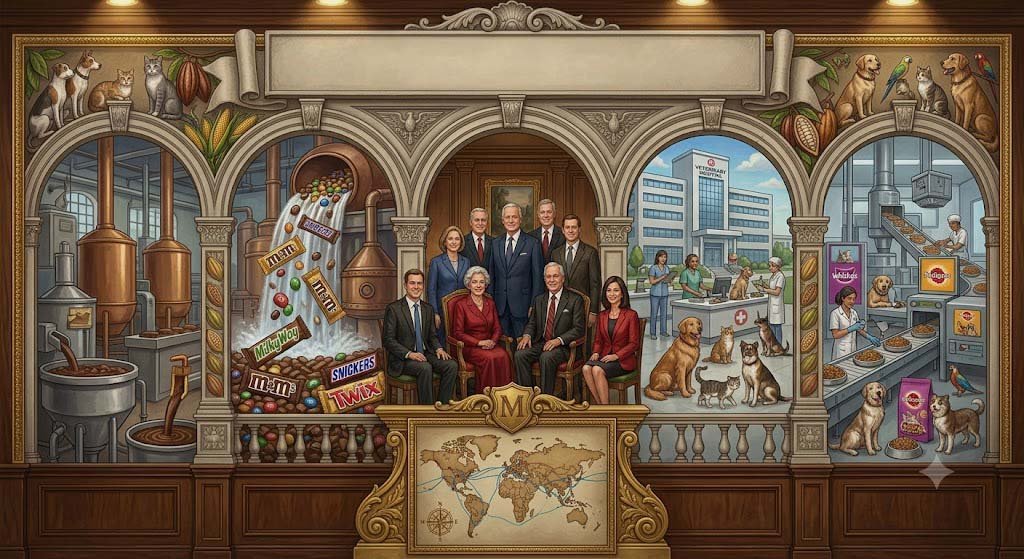
At the very top of the food business sits a family you’ve probably never heard of. The Cargill-MacMillans are the descendants of William Wallace Cargill, who founded Cargill Inc. in 1865, starting with a single grain storage warehouse in Iowa. Today, Cargill is the largest private company in the United States by revenue, generating an estimated $154 billion annually .
The company spans 70 countries, employs 160,000 people, and controls roughly 25% of the world’s grain trade . It supplies giants like Nestlé, McDonald’s, General Mills, and Coca-Cola, dominating global markets for meat, cocoa, salt, and fertilizer . Roughly 90% of Cargill’s shares are owned by about 80 members of the Cargill-MacMillan family, 14 of whom have become billionaires .
Unlike public companies, Cargill answers to no shareholders and issues no quarterly reports. It answers only to the family’s boardroom, keeping its immense power largely hidden from public view .
The Mars Family: A Sweets and Pet Care Empire
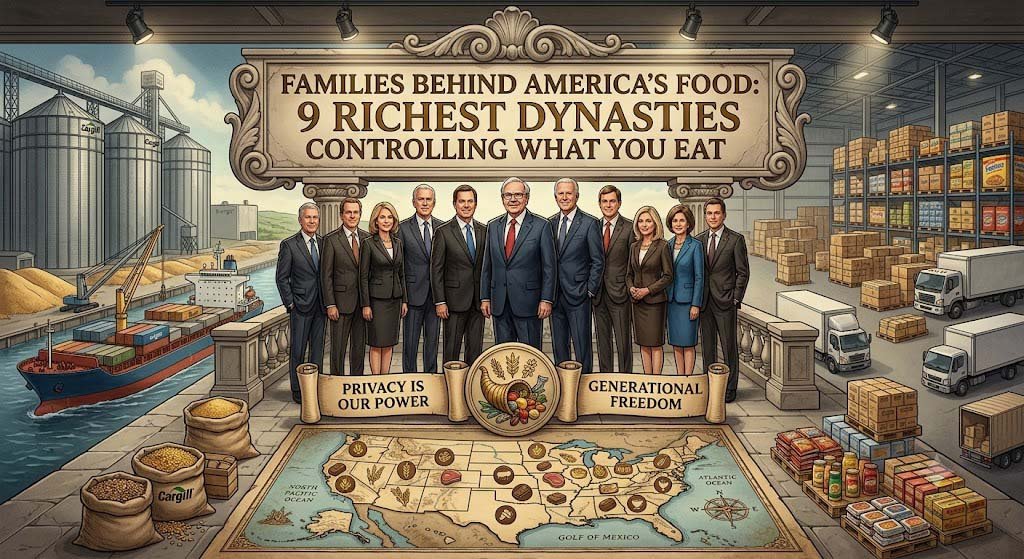
No list of American food dynasties is complete without the Mars family. The company behind M&M’s, Milky Way, Snickers, and Twix dates back to 1911, when founder Frank Mars started making candy in his kitchen . Today, Mars is the second most valuable private family business in the U.S., with an estimated valuation of $121 billion .
The Mars family owns 100% of the company . While Mars is best known for its chocolate, the business has diversified into pet care (with brands like Whiskas and Pedigree) and food (including Ben’s Original rice). A major $36 billion acquisition of Kellanova (formerly part of Kellogg’s) in late 2025 added Cheez-It, Pop-Tarts, and RxBar to its portfolio .
The Cathy Family: Chick-fil-A’s Chicken Fortune
Chick-fil-A may be a fast-food giant, but it remains a family business. Founder S. Truett Cathy’s descendants have built one of America’s richest dynasties . The company’s success—built on a simple chicken sandwich and a policy of closing on Sundays—has turned the Cathy family into billionaires.
While Chick-fil-A is a private company and does not publicly disclose detailed financials, its massive revenue and profitability place it among the most successful restaurant chains in the U.S. The family manages its wealth through private investment firms, betting on tech startups and other ventures .
The Grocery Giants: Butt (H-E-B), Walton (Walmart), and Jenkins (Publix)
Grocery chains are a cornerstone of the family-owned food business in America.
The Butt Family (H-E-B): Charles Butt, owner and chairman of the Texas-based grocery chain H-E-B, ranks No. 289 on Forbes’ list of billionaires with an estimated net worth of $11.1 billion . His sister and nephews are also billionaires . H-E-B, founded in 1905, now operates more than 400 locations with over 100,000 employees .
The Walton Family (Walmart): While Walmart is a public company, the Walton family still controls 44% of it through their shares . With annual sales of $713 billion in 2025, Walmart is the largest business on Forbes’ list of top family-run businesses . More than half of Walmart’s total sales come from grocery , making the Walton family arguably the most powerful dynasty in American food retail.
The Jenkins Family (Publix): The Jenkins family founded Publix Super Markets in 1940. Today, Publix is the fourth most valuable private family business in the U.S., with an estimated valuation of $63.1 billion . The Jenkins family owns about 20% of the company, while current and former employees own the rest .
Other Powerful Food Families
Several other families have built billion-dollar food empires:
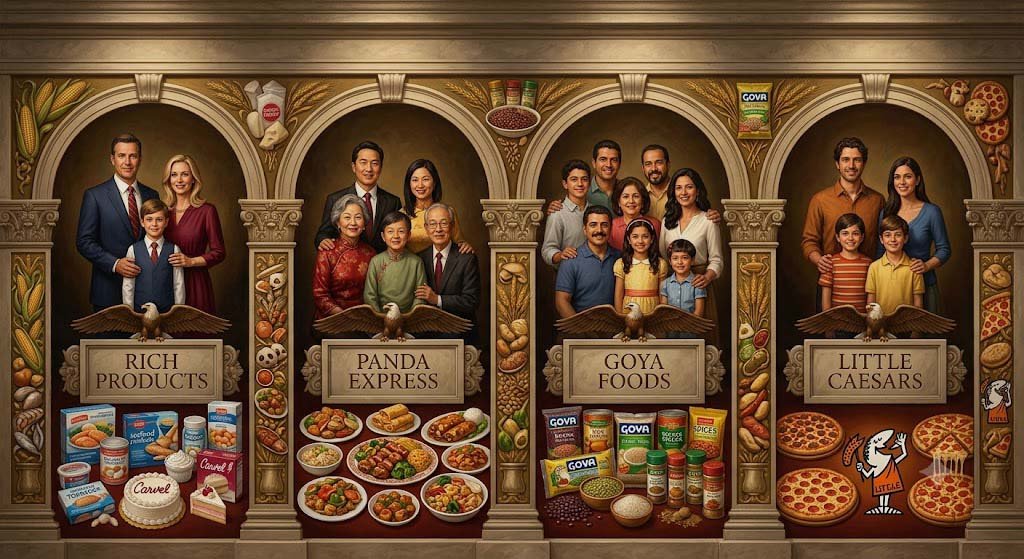
The Rich Family (Rich Products): Bob Rich Sr. invented the first non-dairy whipped topping in 1945. Today, his son Bob Rich Jr. and his wife Mindy run Rich Products, a $5.8 billion food conglomerate that makes everything from frozen seafood (SeaPak) to Carvel ice cream cakes. The family’s fortune is estimated at $6.5 billion .
The Cherng Family (Panda Express): Andrew and Peggy Cherng founded Panda Express in 1983, building it into the largest Asian-American restaurant chain in the country .
The Unanue Family (Goya Foods): Prudencio Unanue Ortiz founded Goya Foods in 1936, and the Unanue family still controls the company, with Robert Unanue serving as CEO. Goya is the largest Hispanic-owned food company in the U.S., producing over 2,500 food products .
The Ilitch Family (Little Caesars): The Ilitch family built Little Caesars into a global pizza empire and also own the Detroit Tigers and Detroit Red Wings .
Why These Families Keep the Business Private
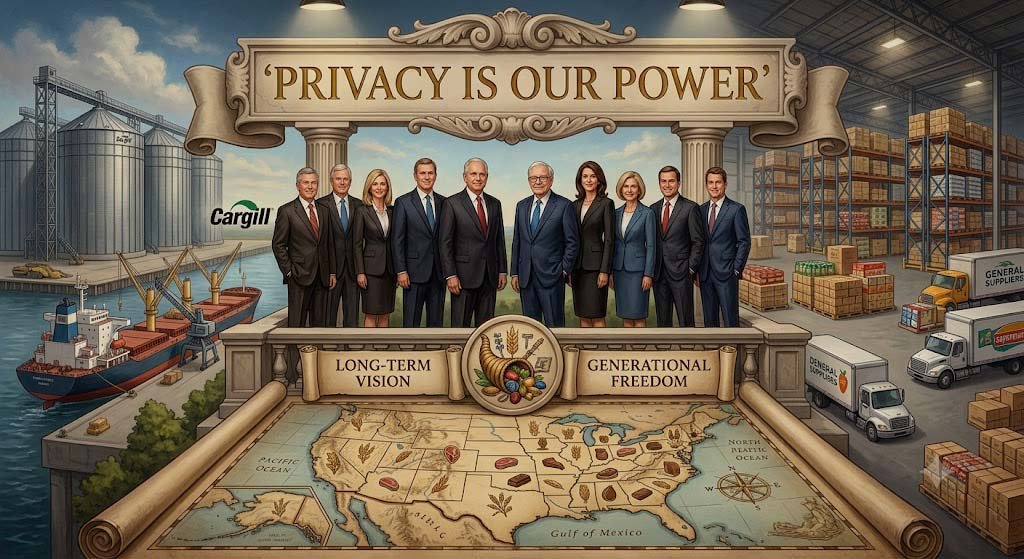
A common thread among these dynasties is their commitment to staying private. The Rich family has a form letter ready for any acquisition offer: “Rich Products is not for sale” . As Bob Rich Jr. put it: “We want to remain a privately held company for eternity” .
The reasoning is simple: privacy gives them freedom. Private family businesses can make long-term decisions without the pressure of quarterly earnings reports. They can invest, expand, and innovate on their own terms—building empires that outlast generations.
About the Author
My name is Dua Qamar, and I am a content writer passionate about business, wealth, and the family dynasties that shape the economy.
Why I Wrote This Article:
I wrote this piece because the food industry is one of the most fascinating examples of family wealth and power in America. The names behind the brands we consume daily—Cargill, Mars, Chick-fil-A—are often unknown. I wanted to reveal the families quietly controlling what we eat and spending billions from the shadows.
How I Approached This Topic:
My research drew on Forbes’ inaugural ranking of America’s largest family businesses and reports on the wealth of food dynasties. I focused on families with significant ownership stakes in food, agriculture, and grocery chains.
Who This Article Is For:
This article is for business enthusiasts, food industry followers, and anyone curious about the billion-dollar families quietly running America’s food supply.
The Message I Hope Readers Take Away:
Behind every grocery aisle and fast-food counter lies a family story. These dynasties have built enduring legacies not just through profit but through a commitment to privacy, independence, and generational vision.
Written by: Dua Qamar


