



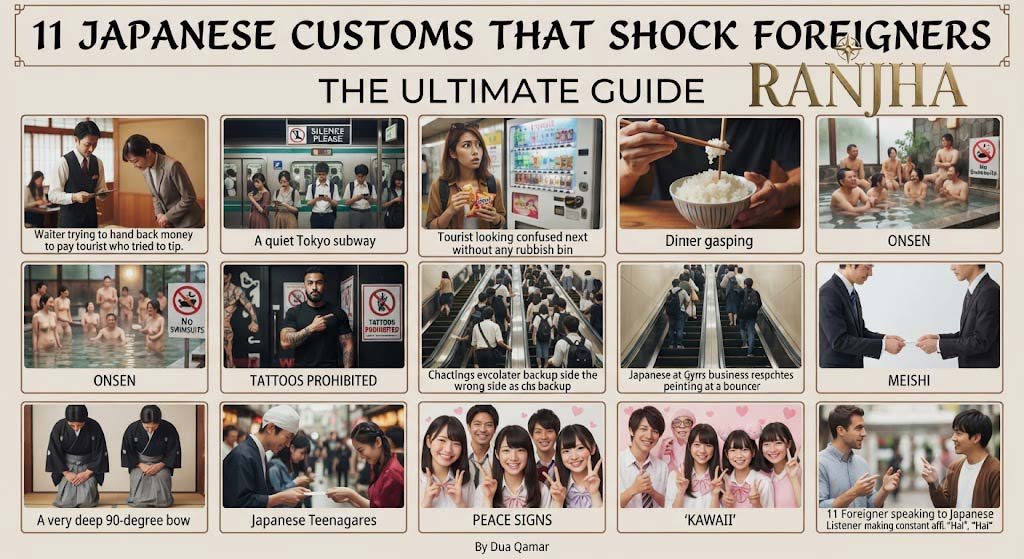
11 Japanese Customs That Always Shock Foreigners
Introduction
Japan is a country of striking contrasts—ultra-modern cities with ancient temples, cutting-edge technology alongside deeply rooted traditions. For first-time visitors, this cultural richness can also be a source of bewilderment. Japanese society places a strong value on collective harmony and social etiquette, resulting in a set of unwritten rules that can catch even the most well-traveled foreigners off guard .
From the pin-drop silence on trains to the absence of rubbish bins, the customs that seem second nature to locals can be completely baffling to outsiders. Yet, as etiquette expert Michiko Sato explains, making an effort to follow these norms—however awkwardly—is greatly appreciated because it shows respect for the culture .
1. The Great Tipping Taboo

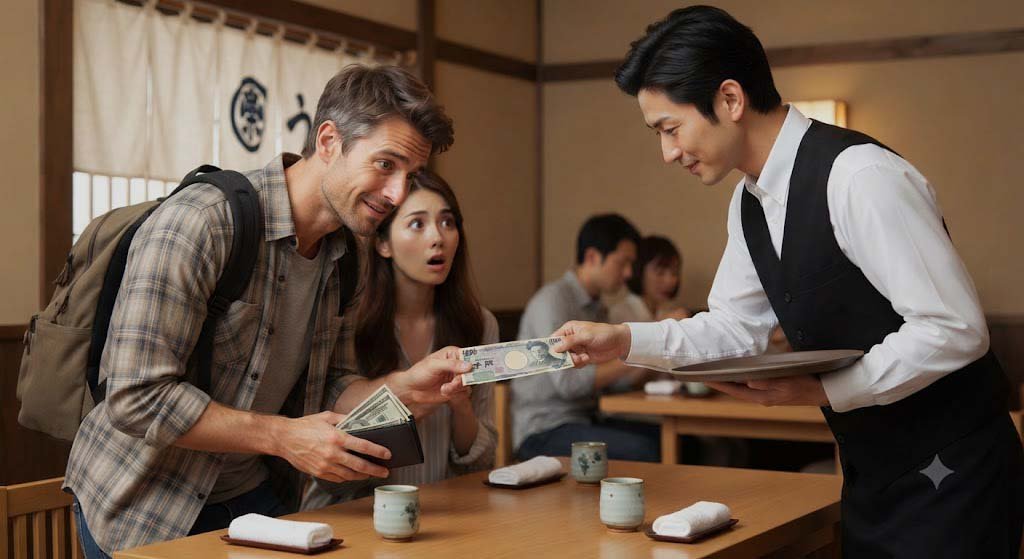
In many Western countries, leaving a tip is expected for good service. In Japan, it is considered rude. Excellent service is simply part of the job, and leaving extra money can cause confusion or even embarrassment for the staff, who may chase you down the street to return your “forgotten” money . One Tokyo restaurant owner put it simply: “My staff and I do not think we need to be paid extra just to do our jobs properly” .
2. The Silence on Public Transport
Step onto a train in Tokyo, and you might be struck by the quiet. Talking on the phone is heavily discouraged, and conversations are kept to a hushed minimum . This is because public transport is seen as a shared quiet space. Even listening to music requires headphones with no sound leakage . Loud voices are considered a disturbance to others and a breach of the social harmony that underpins Japanese culture .
3. The Almost Total Absence of Rubbish Bins
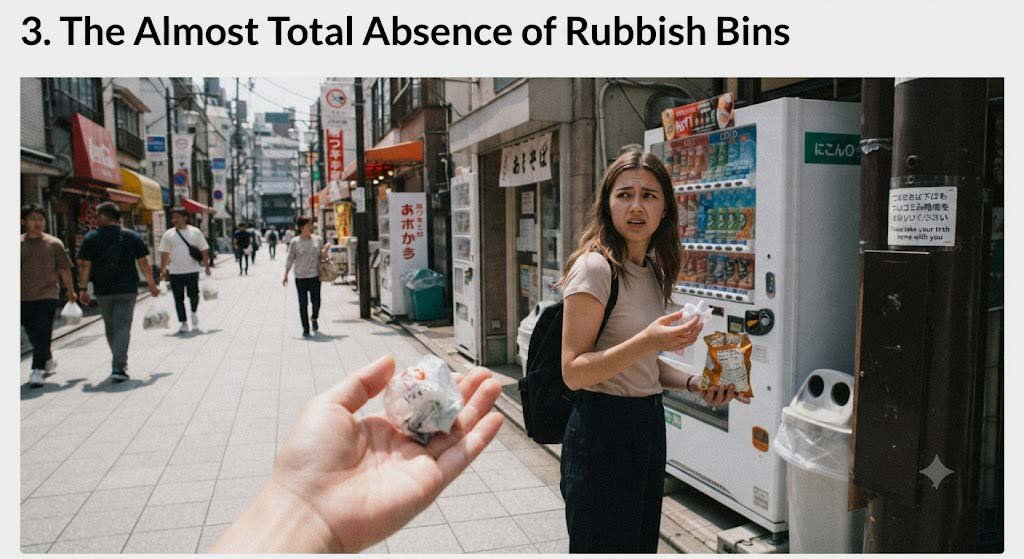
It is a common experience for visitors: buying a snack, finishing it, and then walking for blocks without finding a single public bin to throw away the wrapper . The reason is a combination of historical safety concerns and a cultural emphasis on personal responsibility. The expectation is that you will take your rubbish home with you to dispose of there . This is why carrying a small plastic bag for your trash is an essential travel tip in Japan .
4. The Chopstick No-No’s
Using chopsticks in Japan involves a detailed set of cultural rules and proper etiquette that reflect respect and tradition. There are two major taboos to avoid. The first is sticking your chopsticks upright in a bowl of rice, a gesture that resembles a funeral ritual . The second, and considered the worst faux pas, is passing food directly from your chopsticks to another person’s chopsticks, as this replicates a custom used to pass bones during cremation ceremonies .
5. The Onsen Nudity Rule
Visiting an onsen (traditional hot spring) is a highlight for many travellers, but the customs can be shocking. In most public onsens, swimsuits are not allowed; bathers are fully nude . Furthermore, guests are required to thoroughly wash and rinse their bodies at a shower station before ever stepping into the bathwater, ensuring the communal water remains pristine .
6. The Tattoo Ban at Many Facilities
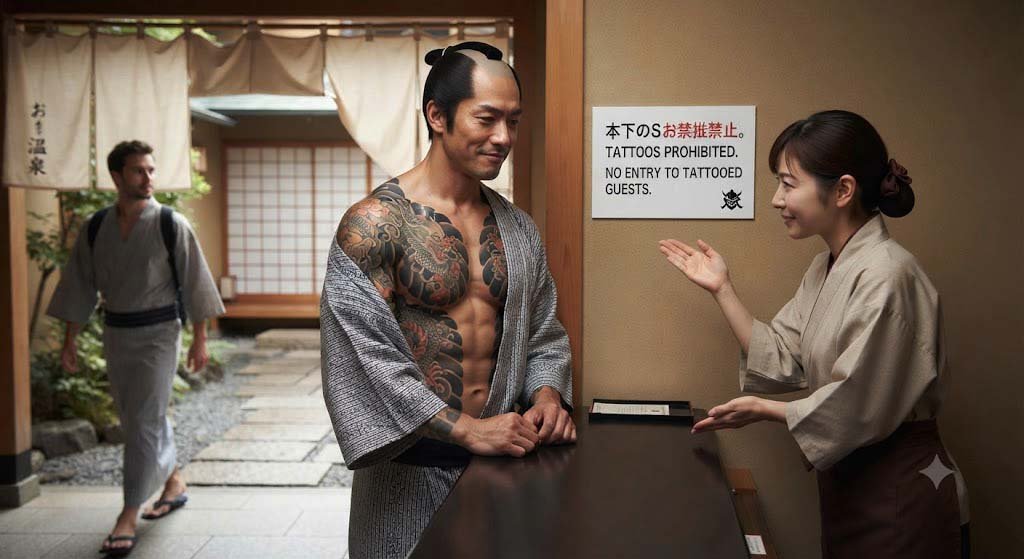
For many foreigners, especially those with tattoos, this can be a significant shock. In Japan, tattoos have historical associations with organized crime (yakuza). As a result, many traditional onsens, gyms, and even some beaches prohibit people with visible tattoos from entering their facilities . However, this is changing, with more “tattoo-friendly” options and private baths becoming available for those with ink .
7. The Unspoken Rules of the Escalator
Standing on the correct side of an escalator is a serious, unspoken rule in Japan. However, the side you are supposed to stand on depends on the city. In Tokyo and eastern Japan, people stand on the left and walk on the right. In Osaka and western Japan, the pattern is reversed . For travellers, the best advice is simply to follow the person in front of you.
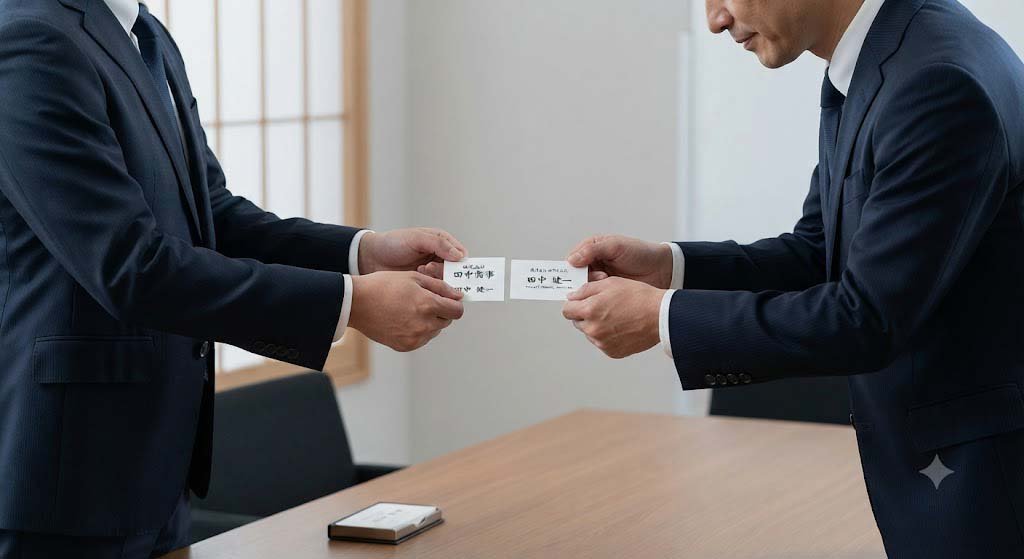
8. The Importance of the Business Card
While many places have gone digital, the exchange of business cards (meishi) remains a highly formal ritual in Japanese business culture. The card is considered an extension of the person, so it must be treated with respect. Always offer a card with both hands, making sure the other person can easily read it. Avoid writing on the card or casually putting it away in your pocket, as these actions may appear disrespectful. Instead, place it in a proper card case or on the table in front of you during a meeting.
9. The Politics of Bowing
Bowing is more than just a traditional greeting; it is an essential element of Japanese communication and social etiquette. The depth and length of a bow convey different meanings—a 15-degree bow is casual, a 30-degree bow is for thanks, and a 90-degree bow is for deep apology or great respect . Foreigners do not need to perfect this custom, but a slight bow or a small nod of the head is usually enough to show respect.
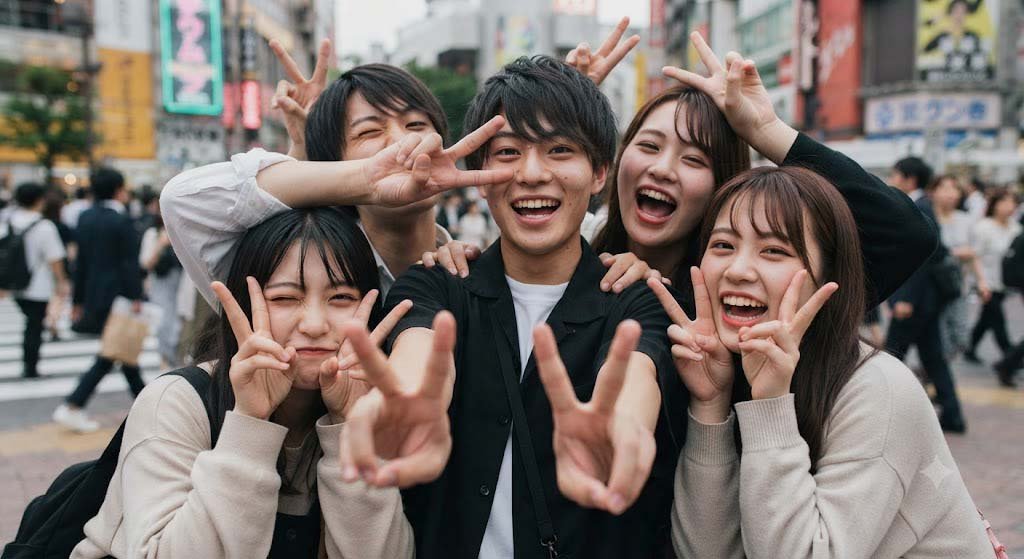
10. The Obsession with Peace Signs
If you ask a Japanese person to take a photo of you, don’t be surprised if you get a peace sign in response. The “V-for-victory” or peace sign is an incredibly popular pose in Japan, often accompanied by a cute “kawaii” expression . For the younger generation, it is simply a reflex when a camera is pointed their way.
11. The “Aizuchi” Style of Conversation
When Japanese people listen to you speak, they will often make constant interjections like “hai,” “un,” or “sou desu ne.” This is a form of active listening called aizuchi, and it demonstrates that they are paying attention . For many foreigners, this constant feedback can feel like they are being interrupted or agreed with too quickly, but it is simply a key part of smooth, harmonious communication in Japan.
Conclusion
These eleven customs represent just a small glimpse into Japan’s rich and complex cultural tapestry. While these practices may initially shock or confuse visitors, they are rooted in deep-seated values of respect, harmony, and collective well-being. The best way to navigate them is with an open mind and a willingness to learn. As etiquette expert Michiko Sato says, simply trying to do things the Japanese way, however awkwardly, is a gesture that will be warmly received .
About the Author
My name is Dua Qamar, and I am a content writer passionate about exploring the diverse cultures and traditions of the world. I believe that understanding a country’s customs is the key to truly appreciating its beauty and connecting with its people. Traveling through the lens of cultural respect enriches the experience for both the visitor and the host.
Why I Wrote This Article:
I wrote this piece because Japan is one of those rare destinations where the culture shock is as memorable as the sights. The customs are so unique and deeply ingrained that they can be baffling for first-time visitors. I wanted to shine a light on some of the most common and significant cultural differences I have learned about, to help prepare travellers and foster a deeper appreciation for Japan’s intricate social fabric.
How I Approached This Topic:
My research involved studying a wide range of materials, from contemporary travel guides and news articles to expert analyses of Japanese business and social etiquette. I focused on gathering up-to-date information from credible sources to present a clear and accurate picture of these customs for a modern audience.
Who This Article Is For:
This article is for anyone planning a trip to Japan, or for anyone simply curious about the country’s unique cultural norms. It’s for those who want to avoid unintentionally causing offence and who believe that travel is best enjoyed when you respect the host country’s traditions.
The Message I Hope Readers Take Away:
The goal is not to overwhelm but to enlighten. Japanese customs may be strict, but the people are generally understanding of visitors. By learning about and respecting these traditions, you not only have a smoother journey but also show appreciation for a culture that has so much to offer. It is a small act of global citizenship that makes travel more meaningful for everyone.
Written by: Dua Qamar


1 Comment
Pingback: The 10 Most Expensive Flowers in the World: Rare Blooms Wo