



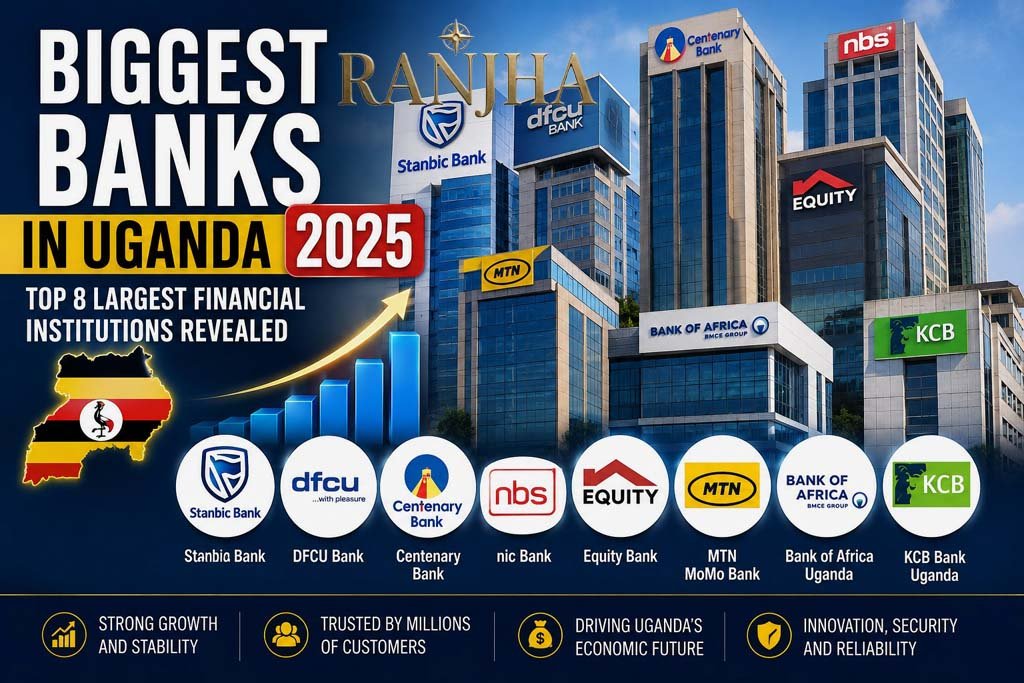
The 8 Biggest Banks In Uganda
Introduction
Uganda’s banking sector has experienced remarkable growth in recent years, reflecting the country’s broader economic development. As of 2025, total industry assets reached an impressive Shs61.59 trillion, up from Shs53.12 trillion in 2024 . This growth has been driven by a combination of factors, including financial inclusion efforts, digital banking innovation, and a stable economic environment .
A striking feature of Uganda’s banking landscape is its concentration. The top five banks account for 55.58% of total industry assets, while the top ten lenders control 79.57% of the market. The remaining 13 banks share just 20.43% of industry assets . This concentration reflects the dominance of well-established institutions with deep roots in the economy, alongside foreign-owned banks that have maintained strong positions.
1. Stanbic Bank Uganda

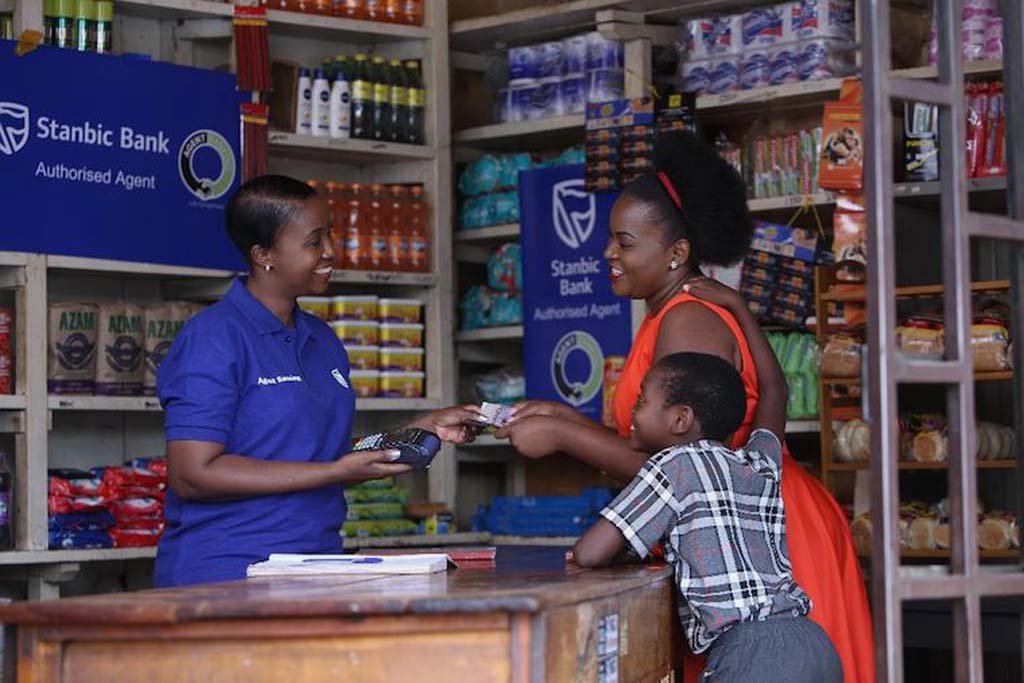
Stanbic Bank Uganda has maintained its position as the country’s largest commercial bank by assets, holding approximately 19.5% of the market . Under the leadership of Chief Executive Officer Mumba Kalifungwa, the bank’s assets grew by 9.28% to Shs11.3 trillion in 2025 .
Stanbic’s dominance is not just about size—it is also Uganda’s most profitable bank. The institution’s net profit grew by 20.42% in 2025 to UGX586.2 billion, giving it a 26.89% share of the industry’s overall earnings. The bank’s journey has run alongside Uganda’s economic changes over the past three decades, particularly since acquiring an 80% stake in Uganda Commercial Bank in 2002 .
Stanbic’s market share is larger than the combined assets of 12 smaller banks
2. Centenary Bank

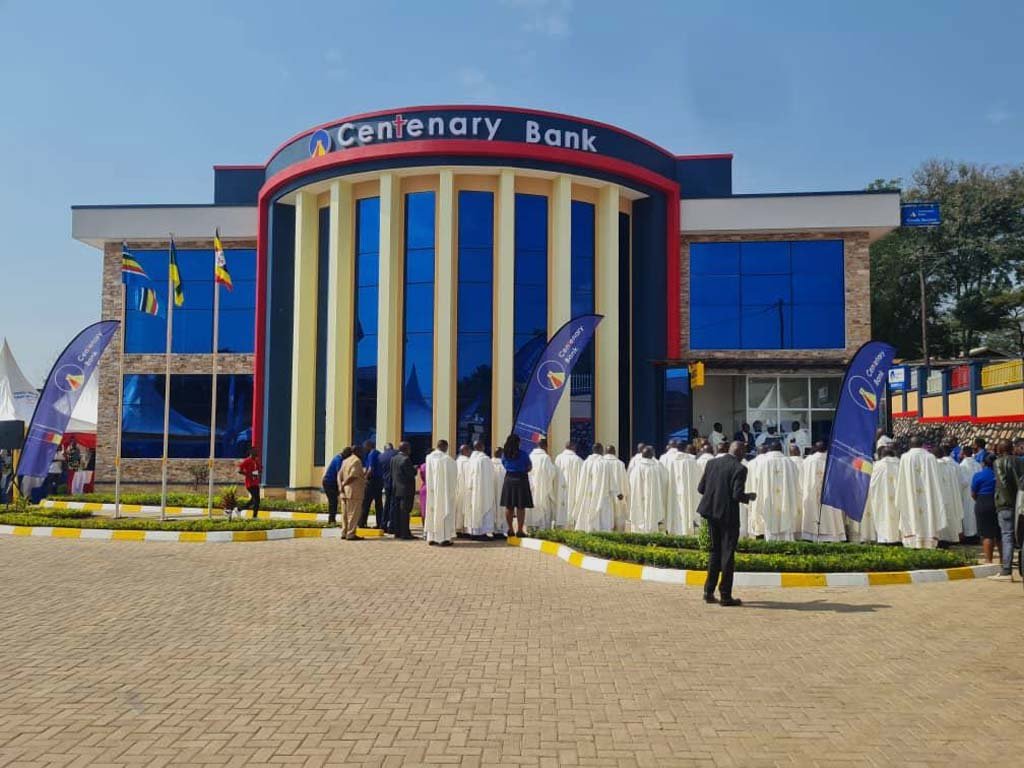
Centenary Bank retained its position as Uganda’s second-largest bank, recording a 20.96% increase in assets to Shs8.6 trillion from Shs7.11 trillion a year earlier . Majority-owned by the Catholic Church, the lender has grown to account for 13.97% of the sector’s total assets.
The bank’s profitability matches its size, with profits growing 23.94% to UGX424.23 billion in 2025 . This performance came during the final full reporting period under outgoing Managing Director Fabian Kasi, who served for more than 15 years. His successor, Godfrey Byekwaso, took over in July 2026 .
Centenary Bank has demonstrated that indigenous financial institutions can compete effectively with foreign-owned banks when well managed . Together with Stanbic, these two banks alone control 46.35% of total banking sector profits .
3. Absa Bank Uganda
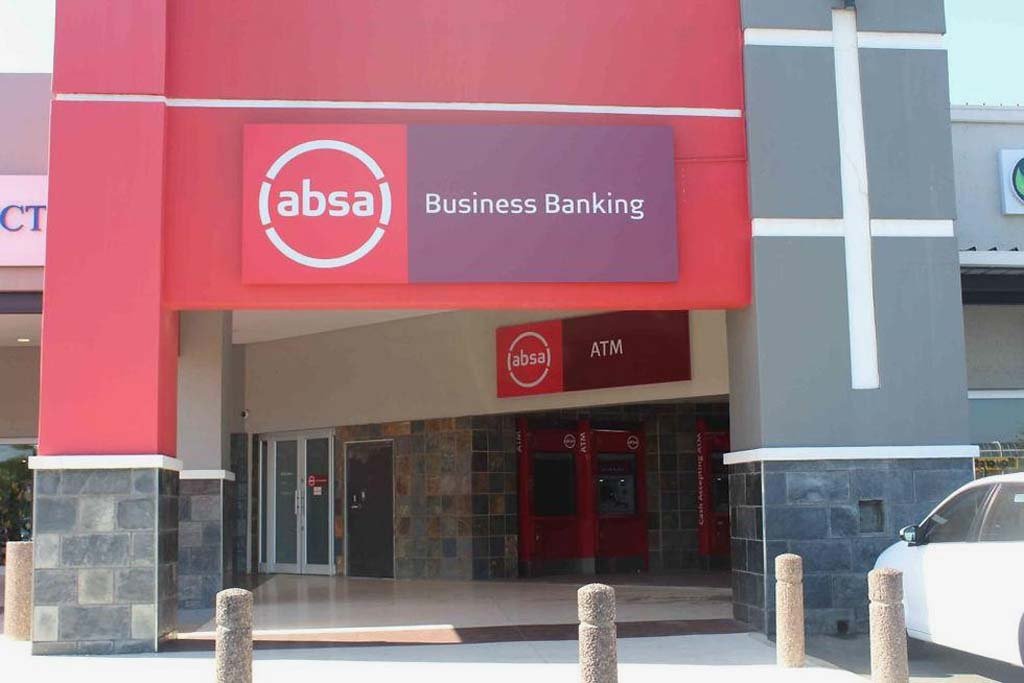
Absa Bank Uganda ranked third after posting one of the strongest growth rates among leading banks. Under Managing Director David Wandera, the bank’s assets rose by 29.47% to Shs7.03 trillion from Shs5.43 trillion in 2024 . This growth gives Absa a market share of 11.42% .
The growth was largely driven by the acquisition of the Retail and Wealth Business Units of Standard Chartered Bank Uganda . Absa’s profit also rose significantly, with a 25.04% increase to UGX222.4 billion in 2025, giving the bank a 10.20% market share under the profit category .
4. dfcu Bank
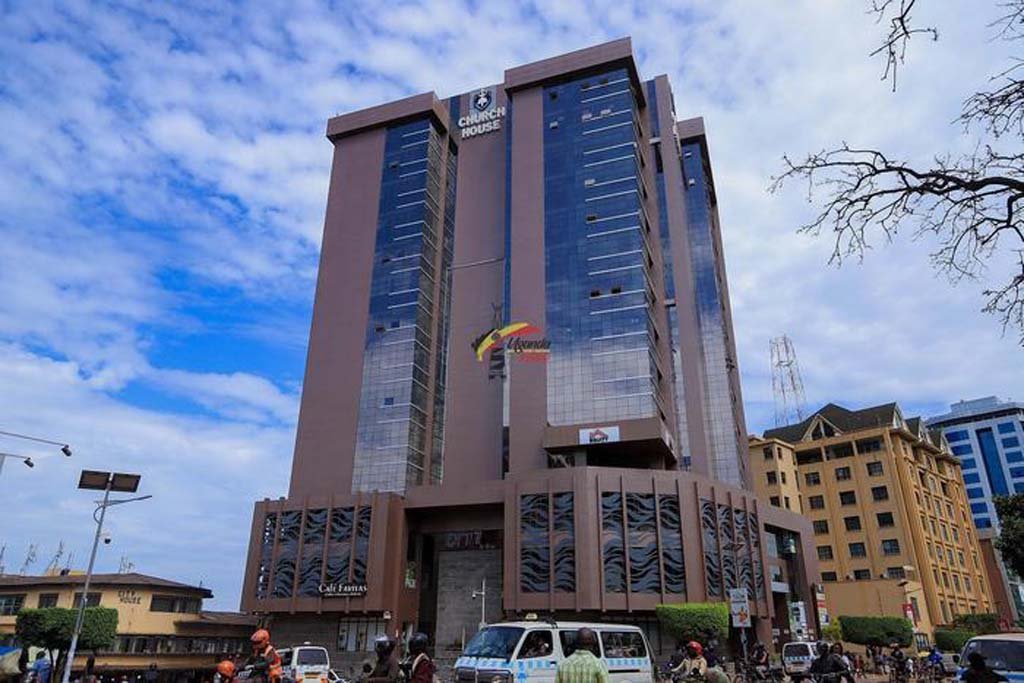
dfcu Bank remains Uganda’s fourth-largest bank by assets as of December 2025. The lender’s assets increased by 8.09% to Shs3.74 trillion from Shs3.46 trillion recorded a year earlier . With a 6.07% market share, dfcu’s asset base now surpasses the combined assets of five smaller banks. Led by Managing Director Charles Mudiwa, the institution has remained focused on expanding its business while strengthening service delivery and maintaining operational excellence.
5. Equity Bank
Equity Bank completed the top five rankings after growing its assets by 5.03% to Shs3.55 trillion from Shs3.38 trillion in 2024, representing a market share of 5.77% .
6. Bank of Baroda
Bank of Baroda followed in sixth position, with assets increasing by 13.31% to Shs3.49 trillion from Shs3.08 trillion . The lender commands a market share of 5.67% and also ranks fourth in profitability, posting a 17.08% profit increase to UGX156.83 billion .
7. Standard Chartered Bank

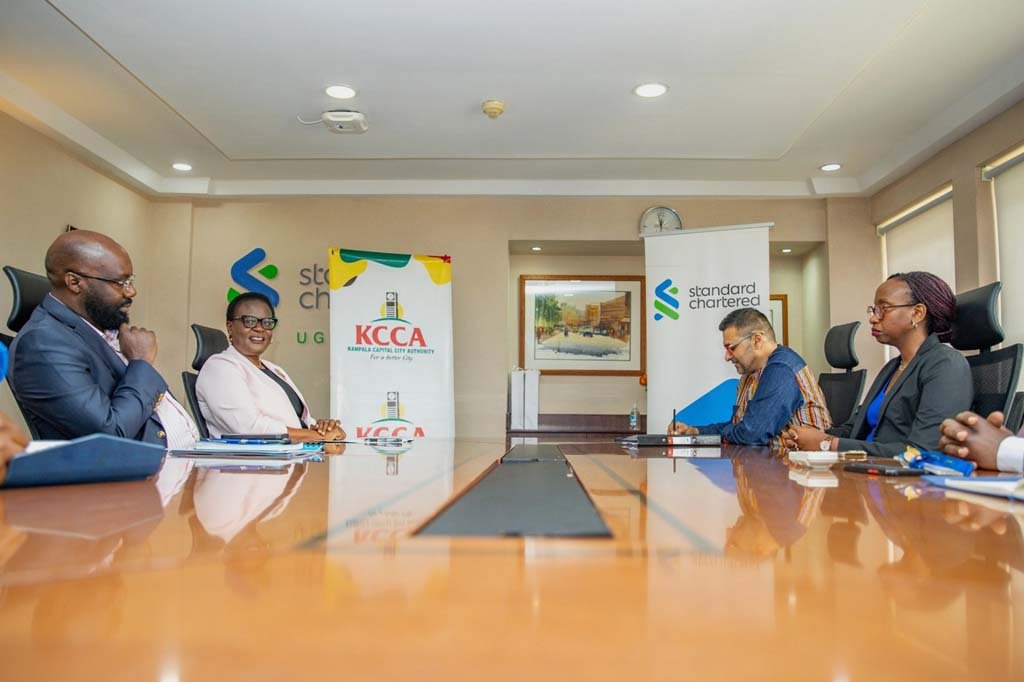
Following the sale of part of its business to Absa Bank Uganda, Standard Chartered Bank moved down to seventh position. Under Managing Director Sanjay Rughani, the bank reported assets of Shs3.48 trillion in 2025, giving it a market share of 5.65% . Despite the asset repositioning, Standard Chartered posted one of the sharpest profit improvements in the sector—a 502.88% increase to UGX115.09 billion, up from UGX19.09 billion in 2024 .
8. Diamond Trust Bank (DTB)
Diamond Trust Bank (DTB) placed eighth after posting assets worth Shs2.91 trillion, reflecting a modest increase from the previous year’s Shs2.86 trillion. The bank, led by Managing Director Godfrey Sebaana, controls 4.73% of the market .

The Bigger Picture: A Growing Industry

Uganda’s banking sector is not just growing in size—it is also becoming more inclusive. Financial inclusion rose from 77% in 2018 to 81% in 2023, largely driven by mobile money . However, challenges remain, including high lending rates and limited access to financial services in rural areas .
The Bank of Uganda has been actively working to strengthen the financial sector through regulatory reforms, including operationalizing prudential standards like the Liquidity Coverage Ratio (LCR) and Net Stable Funding Ratio (NSFR) . Non-performing loans declined to 3.7% from 4.9%, and profitability across the sector has improved, underpinning confidence and intermediation .
Conclusion
The largest banks in Uganda—led by Stanbic, Centenary, and Absa—continue to dominate the sector, but their success reflects broader trends of growth, innovation, and financial inclusion. As the country’s economy expands and digital banking evolves, these institutions will play an increasingly vital role in shaping Uganda’s financial future.
About the Author
My name is Dua Qamar, and I am a content writer passionate about exploring economic trends and financial systems across Africa.
Why I Wrote This Article
I wrote this piece because understanding the banking sector is essential to understanding a country’s economic health. Uganda’s banking industry is a fascinating case study in growth, competition, and resilience. I wanted to share this story with readers who appreciate business and economic analysis.
How I Approached This Topic
My research involved analyzing official financial reports, including data from the Bank of Uganda’s Integrated Annual Report for 2024/2025 and industry analysis from Business Focus. I cross-referenced multiple sources to ensure accuracy and provide a comprehensive picture of the sector’s landscape.
Who This Article Is For
This article is for business enthusiasts, investors, students, and anyone curious about Uganda’s economic landscape and the financial institutions that power it.
The Message I Hope Readers Take Away
Uganda’s banking sector is a story of growth and concentration—a few dominant players lead the way, but the industry’s expansion reflects the country’s broader economic potential.
Written by: Dua Qamar


1 Comment
Pingback: 10 Biggest Banks in Nigeria by Assets 2015 – Full List